After years of producing corporate videos across London and the UK — for global brands, fast-growing startups, medical device companies and consumer electronics launches — I've noticed a consistent pattern: the videos that actually get used by marketing teams share a handful of specific qualities. The ones that don't tend to share different ones. This is what separates a corporate video that performs from one that disappears into a shared drive.
It starts before the camera
The most common reason a corporate video fails to deliver is a vague brief. "We want something professional that showcases the brand" is not a brief — it's a starting point for a conversation. A good production process begins with specific questions: Who is the intended viewer? Where exactly will this be published? What do you want them to think, feel or do after watching? What's the one thing the video must communicate?
A good videographer will push for these answers before talking about cameras, locations or schedules. If they don't, that's a warning sign.
Audio is more important than the camera
Viewers will tolerate imperfect visuals before they'll tolerate bad audio. Muddy dialogue, background noise or inconsistent audio levels will kill a corporate video regardless of how good the cinematography is. Broadcast-grade audio — lapel microphones, boom mics, direct feeds from PA systems at live events — is non-negotiable for professional production.
On location shoots, this often means a pre-production visit or at least a detailed conversation about the filming environment. Concrete rooms, air conditioning units and open-plan offices all create specific audio challenges that need to be planned around, not discovered on the day.
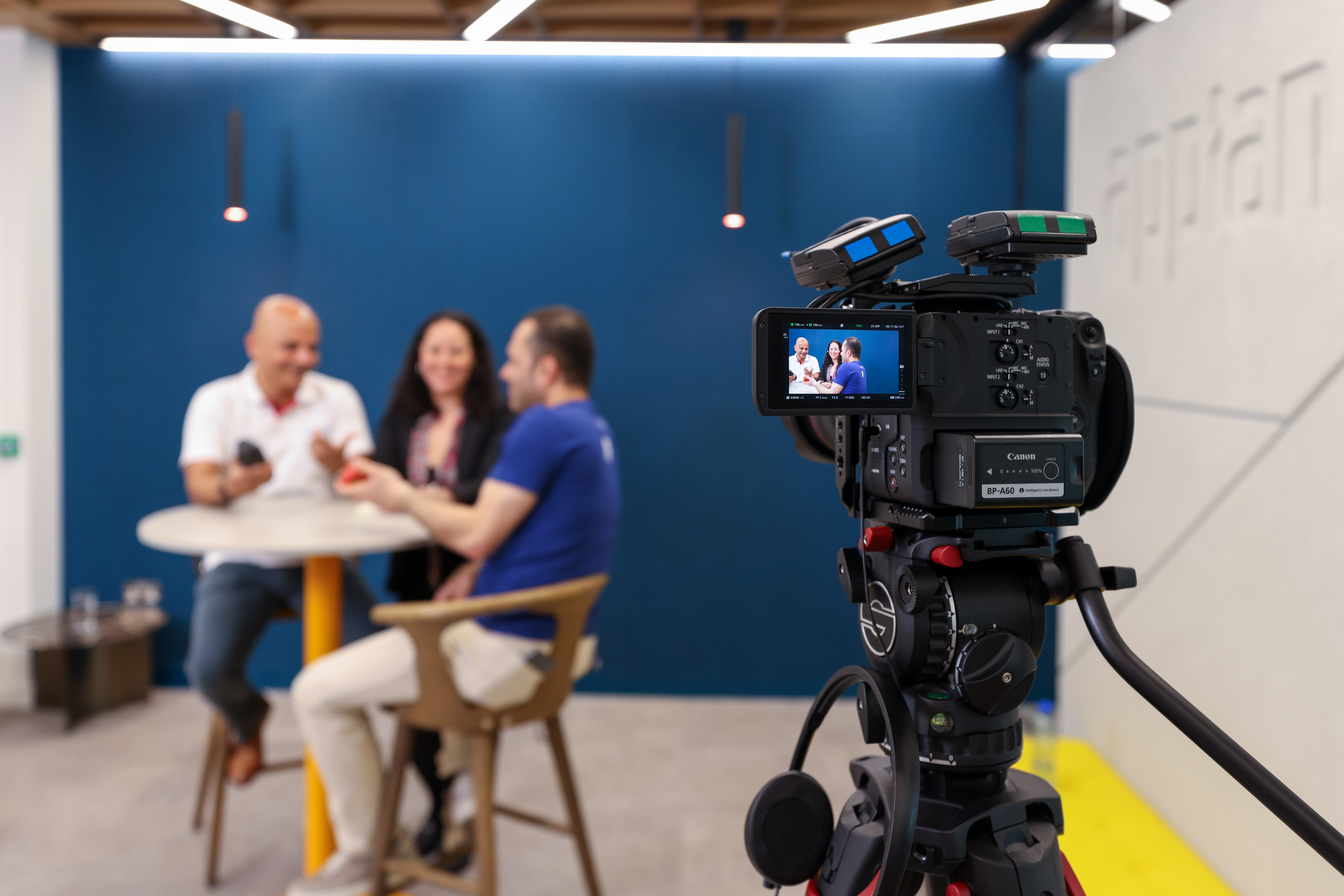
Appian x Yexle — 20 Fenchurch Street, London
The Appian x Yexle shoot — a real example
One of the more memorable briefs I've received was from Appian and Yexle, filmed at the Walkie Talkie building in London. The challenge wasn't technical — it was conceptual. Both company names are routinely mispronounced, and the video needed to address this directly while demonstrating a genuine working partnership between the two teams.
The solution was a two-camera shot-reverse-shot interview format, with the Managing Director of Yexle and a senior manager from Appian speaking directly to each other rather than to camera. The format created natural, conversational pronunciation of both names in context — something a scripted monologue couldn't have achieved. The final video was used across global sales and marketing channels.
The lesson: the format should serve the communication objective, not the other way around.
Appian x Yexle partnership announcement video
Turnaround time is part of the product
For event-based content, post-production speed is a commercial consideration, not just a convenience. A conference highlights video published 72 hours after the event captures momentum — delegates are still talking about it, LinkedIn is still active, the conversations are live. The same video published three weeks later competes with whatever happened last week.
Fast turnaround requires pre-production planning: knowing in advance which moments matter, having music selections ready, and building an edit workflow that doesn't start from scratch at the end of a long filming day. It's not about cutting corners — it's about being organised enough that speed is possible.
The deliverables conversation
Modern video production rarely produces one output. A single shoot — a brand film, a conference day, a product launch — can generate a main video, a 60-second cut for social, a 15-second cut for ads, vertical formats for Instagram and TikTok, and still frames for press. The economics of a single shoot day producing multiple assets are compelling.
Agree on all deliverables before production begins. Adding them after the edit is complete is possible but expensive — you're essentially commissioning a new edit. The conversation is much easier (and cheaper) when it happens during pre-production planning.