Hiring a freelance videographer is one of the most impactful production decisions a marketing team or event organiser can make — and one of the easiest to get wrong. After years of working with clients across corporate events, medical conferences, brand films and tech launches, I've seen what separates a successful brief from a frustrating one. This guide covers what you should actually look for, ask, and agree before anyone picks up a camera.
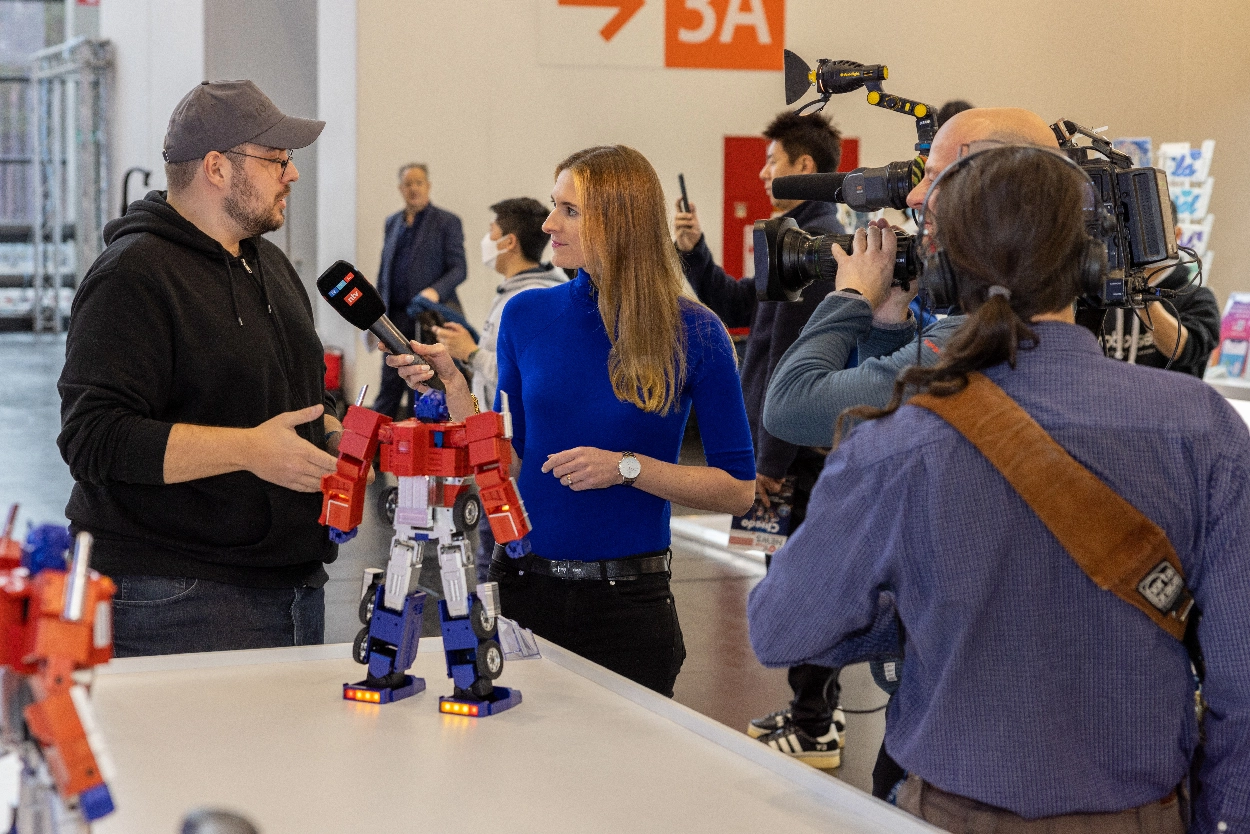
On-location interview — the kind of situation a good videographer handles without direction
Know exactly what you're hiring for
The term "videographer" covers a huge range of skills and approaches. Someone brilliant at intimate brand films may struggle in a fast-moving conference environment. A strong event videographer may not have the patience for a controlled interview setup. Before you start looking, define your project type clearly: is it a live event with unpredictable timing, a scripted brand video, a series of talking-head interviews, or something else? The answer changes who you need.
What to look for in a portfolio
Watch the work — not the showreel. Showreels are edited to the best moments of the best projects; they tell you very little. Ask to see full-length examples that match your brief. If you're hiring for a conference, ask to see a full conference highlights video, not a 90-second music-led compilation. Check the audio quality (often the first thing to fail at live events), the shot variety, and whether the edit feels rushed or thoughtful.
Also look at the consistency across projects. A portfolio with five exceptional videos is more trustworthy than one with 30 mediocre ones.
Xiaomi 12T launch — an example of the kind of full portfolio piece to ask for
Questions worth asking before you book
The questions you ask during enquiry reveal almost as much as the portfolio. Good ones to start with:
- Have you filmed at this type of venue or event before? Familiarity with the environment matters — large conference halls, poorly lit venues and fast-moving trade shows all have specific challenges.
- What happens if your main camera fails on the day? Any professional carries backup equipment. If they don't, that's a risk you're taking on.
- Who will actually be on-site? Some videographers subcontract. Make sure you're meeting the person who'll be holding the camera.
- What's your turnaround time for the edit? This matters more than most clients realise — post-event content has a short window of relevance. A highlights video published three weeks after your conference is worth a fraction of one published within 72 hours.
Understanding rates and what drives the cost
Rates vary enormously. A London-based professional with broadcast-grade equipment typically charges from £750 for a half day (up to 4 hours) or £1,200 for a full day (up to 9 hours on-site). Post-production — editing, colour grading, audio mixing — is quoted separately and depends on the complexity and number of deliverables.
The things that push cost up: multi-camera setups, same-day turnaround edits, drone footage, multiple deliverable formats, and specialist environments like medical events or international conferences. Be upfront about your deliverables from the start — surprises mid-project are how budgets spiral.
Brief well and the result follows
The quality of a video is largely determined by the quality of the brief. A good videographer will push back on a vague brief — that's a positive sign. The brief should cover: the purpose of the video, the intended audience, where it'll be used (LinkedIn, internal comms, a website landing page), the tone, any key moments that must be captured, and the deadline. A run-of-show for events is essential — without it, a videographer is guessing which moments matter.
The most successful client relationships are the ones where the videographer is treated as a creative collaborator from the planning stage, not a camera operator who shows up on the day.